
You are about to wire $800,000 into a U.S. real estate development project.
You have done your homework. You read the offering documents, checked the regional center’s track record, and verified the job creation numbers. But as you look at the capital stack, you notice a senior construction loan from a major institutional lender.
If you are like most investors, you will probably scroll right past it. Don’t.
That senior lender isn’t just background noise. In fact, it is one of the clearest signals of project quality you will ever find and most EB-5 investors completely miss it.
The Fear Every EB-5 Investor Carries
When you put your hard-earned capital at risk in a construction project, you aren’t just betting on a great idea or a prime location. You are betting on pure execution.
You need that building to rise on budget and on schedule. Why? Because your green card literally depends on the economic activity and jobs that construction creates.
But let’s be real construction is unpredictable. Costs spike, permits get caught in bureaucratic red tape, and market conditions can shift overnight. For an immigrant professional who absolutely cannot afford to lose $800,000 or restart a years-long green card process, the burning question is: Who is watching the developer?
In a well-structured EB-5 deal, the answer is the senior lender.
What Most EB-5 Investors Get Wrong About Lenders
Many investors look at the capital stack and view the lender as a boring, technical line item the bank that gets paid back first and stays out of the way. That is not how real estate development works in the real world.
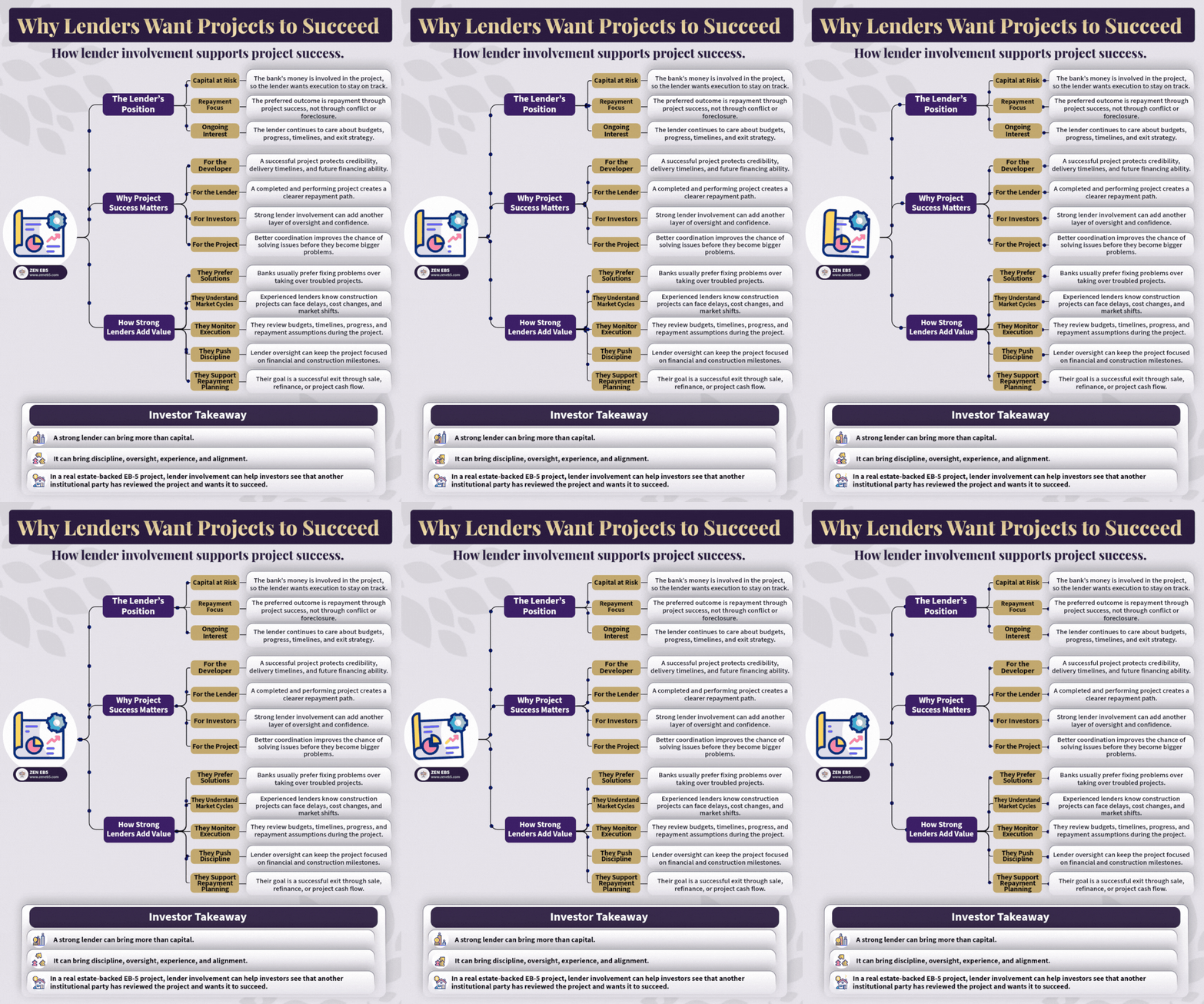
An institutional bank funding a project has massive skin in the game. In a typical construction deal, the senior loan covers 50% to 65% of the total project costs. That means the lender is on the hook for millions of dollars. They care deeply about whether that building gets finished, leased, and sold because their repayment depends on it.
This isn’t charity. It’s total alignment of interests.
Before a reputable bank signs off on a loan, their own risk management teams do an incredibly deep dive. They audit the developer’s past performance, grill them on market fundamentals, stress-test the budget, and tear apart the exit assumptions.
Once they commit the cash, they don’t just walk away. They stay hyper-involved reviewing monthly fund requests, tracking milestones, and inspecting the site. For you, this means a massive financial institution has already vetted the project for its own survival.
How Lender Oversight Protects Your Green Card
In the EB-5 world, you usually invest through a USCIS-designated regional center as a subordinate or mezzanine equity holder. The senior lender sits right above you.
Because the bank is first in line to get paid back, they have the ultimate incentive to keep the project on the rails. Trust us, banks hate foreclosure. Foreclosure is slow, incredibly expensive, and an absolute logistical nightmare. What they actually want is a 100% completed project that generates clean cash flow.
This preference drives how they behave during construction:
- They don’t just fund and forget: They monitor every single dollar spent during construction draws.
- They hold feet to the fire: They push the developer to hit specific financial and physical milestones.
- They are problem solvers: When issues pop up (and in construction, they always do), experienced lenders step in to find realistic solutions before things get messy.
If you have filed your I-526E petition and face a multi-year wait for visa processing, project continuity is everything. A stalled project creates a domino effect of disasters for your money, your timeline, and your legal status.
A vigilant bank doesn’t eliminate all risk, but it dramatically lowers the odds of a project failing without anyone noticing until it’s too late.
Checklist: Evaluating an EB-5 Project’s Capital Structure
Not all loans are created equal. When you are looking at a project, keep these four questions in mind:
- Is the lender a recognized institution? A national or strong regional bank with strict underwriting standards is a green flag. A private credit fund with loose rules might not offer the same level of safety.
- Is repayment tied to project completion? You want a lender who needs a finished, successful building to get their money back, not one looking for an excuse to seize the land.
- What is the job creation cushion? The EB-5 program requires ten jobs per investor. If a project barely hits that mark, any minor delay could ruin your immigration case. Look for a massive job cushion 50%, 75%, or more so you are safe even if the project underperforms.
- Is the project USCIS-approved? An approved I-956F form confirms that USCIS has already reviewed and greenlit the project structure and job methodology. Investing before this approval adds a whole extra layer of unnecessary risk.
Zenn@Legacy: Built with Institutional Alignment
If you want to see what this structural discipline looks like in action, take a look at Zenn@Legacy a 140-unit Class A multifamily townhome development in Peoria, Arizona (part of the booming Phoenix metro area). Sponsored by EB-5 Coast to Coast Regional Center, this project has already received its official USCIS I-956F approval.
Here is how the project aligns with a safety-first mindset:
- High Unemployment Area (HUA) Designation: This places the project in a priority policy zone, reducing your required investment threshold.
- Short 3-Year Investment Term: This is one of the shortest timelines on the EB-5 market, minimizing your exposure to long timeline delays.
- A 107% Job Cushion: This is the standout feature. The project is projected to create more than double the required jobs per investor. The development would have to face an unprecedented disaster to put your job count and your green card at risk.
Peoria is surrounded by a massive employment hub with over 100,000 jobs driven by giants like Amazon, FedEx, Pepsi, and Costco. This built-in economic demand heavily backstops the project’s success.
No EB-5 deal is a guaranteed home run, but Zenn@Legacy shows exactly what rigorous, bank-grade underwriting looks like.
The Takeaway
When you are assessing an EB-5 opportunity, stop treating the senior lender as background noise. Think of them as your parallel due diligence team. It tells you that an institution with zero tolerance for bad math has looked at the project and said, “We’re in.”
EB-5 capital must legally remain “at risk” any advisor who tells you otherwise isn’t being honest. But smart investing is about mitigating the risks you can control. A strong lender drastically increases the odds that everyday construction hiccups get resolved long before they ever touch your capital or your family’s future in the United States.
Before you sign on the dotted line, ask yourself: Who else is watching this project? And does this capital stack reflect the discipline my $800,000 deserves?
Want to see if the EB-5 program makes sense for your family’s goals? Schedule a quick, no-obligation chat with the ZEN EB5 team at zeneb5.com/schedule/ and get complete clarity on your next steps.