
You wired $800,000 into a U.S. real estate project. The loan has closed. The developer says construction is underway. But you live in a different state. You have an H-1B renewal coming up, a job to focus on, and no visibility into what’s actually happening on the ground in Peoria, Arizona. The question that keeps surfacing: who is watching?
This is one of the most honest — and underasked — questions in EB-5 investing. And the answer has everything to do with how a project is structured, who the lender is, and what accountability mechanisms were built in before the first shovel ever hit the ground.
The Real Risk Isn’t Finding a Project — It’s What Happens After You Invest
Most investors do their homework before committing capital. They study the developer’s track record. They review the regional center’s approval. They check whether the project qualifies as a High Unemployment Area. That’s the right process.
But here’s what often gets overlooked: once the loan closes and construction begins, the project enters its riskiest phase.
Construction is where timelines slip. It’s where budgets stretch. It’s where unexpected costs show up and decisions get made quickly, sometimes without proper review. For an EB-5 investor sitting in California or Texas, 1,500 miles away, there’s no easy way to know whether your capital is being used the way it was supposed to be used.
This isn’t a hypothetical fear. USCIS requires that EB-5 capital be at risk, meaning there are no guarantees. But “at risk” doesn’t mean “unmonitored.” The difference between a well-structured project and a poorly structured one often comes down to what oversight mechanisms exist during construction — not just at the time of funding.
Why the Loan Closing Is the Beginning, Not the End
A common assumption among first-time EB-5 investors is that a loan closing signals the hardest part is over. The financing is in place, the USCIS approval came through, the I-526E petitions are filed. What else is there to watch?
The answer: everything that happens next.
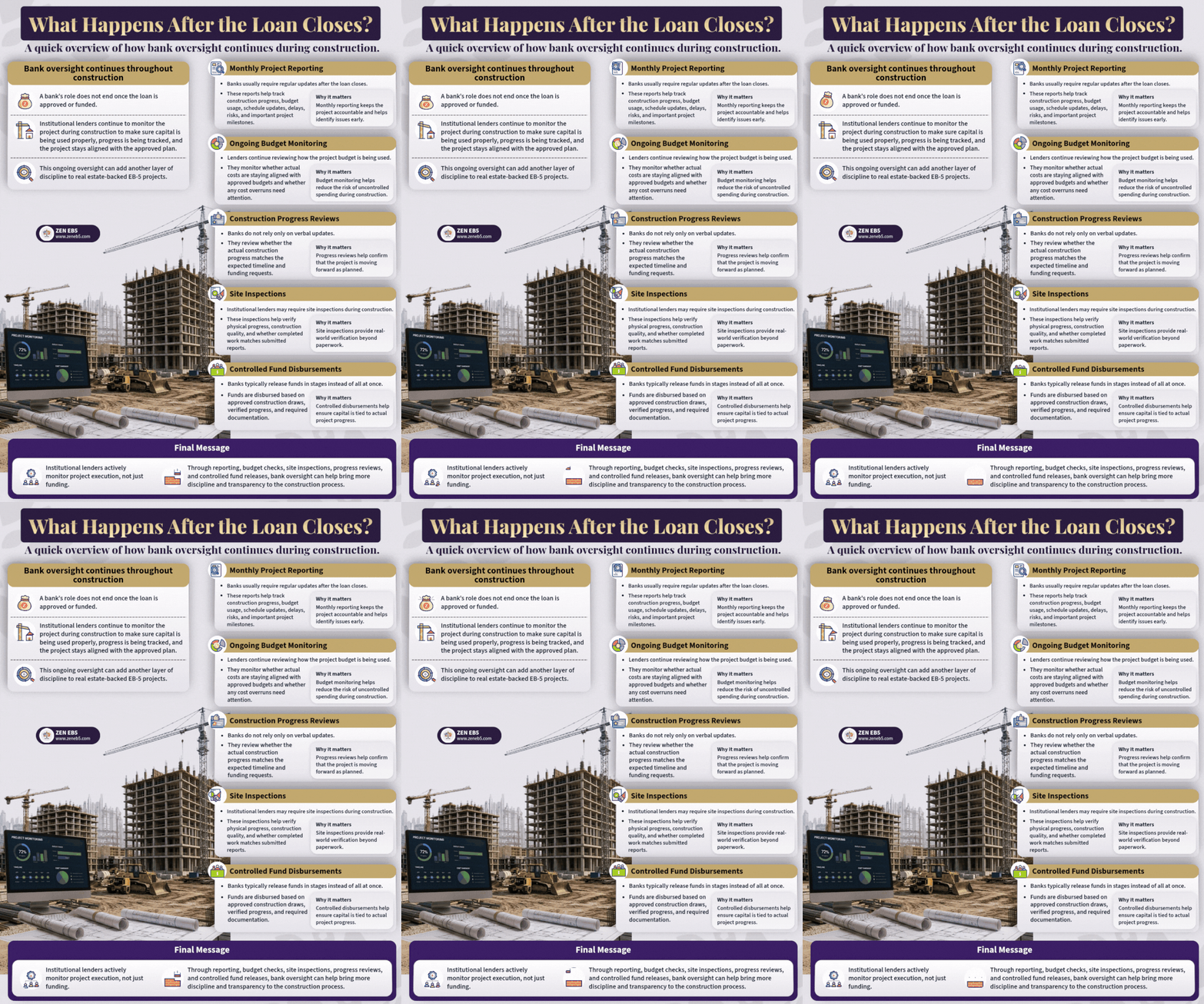
Institutional lenders — the banks and financial institutions that provide senior debt on real estate projects — don’t disappear once the loan is funded. They have their own capital at stake, and they protect it through active monitoring throughout the construction period.
This ongoing oversight typically includes several structured mechanisms:
Monthly project reporting requires the developer to submit regular updates on construction progress, budget usage, schedule adherence, identified risks, and upcoming milestones.
Ongoing budget monitoring means the lender is reviewing whether actual costs are staying aligned with the approved budget — and flagging variances before they become problems.
Construction progress reviews compare what the developer says is happening with what the documentation actually shows, and new funding releases are often tied directly to verified progress.
Site inspections add a physical layer of verification — lenders may send independent inspectors to confirm that the work described in reports matches the physical state of the project.
Controlled disbursements mean funds are released in stages, tied to approved construction draws and documented completion of prior work — not disbursed all at once.
For an EB-5 investor, this institutional structure matters for one specific reason: it creates a system of checks that runs parallel to the project’s execution. It doesn’t eliminate risk — no oversight mechanism does — but it introduces accountability at the lender level that benefits every stakeholder in the capital stack, including you.
What Strong EB-5 Construction Oversight Actually Looks Like
The EB-5 Reform and Integrity Act of 2022 introduced new transparency requirements for regional centers and project sponsors, including more rigorous disclosure obligations and USCIS oversight mechanisms. But the Act also reinforced something experienced investors already understood: the quality of a project’s execution monitoring is as important as the quality of its financing.
When evaluating an EB-5 project, the question to ask isn’t just “Is this project funded?” The question is: “What happens when something goes wrong during construction — and who will know first?”
A project with institutional senior lenders, controlled disbursement structures, and mandatory reporting schedules has built-in accountability. Budget overruns get flagged early. Construction delays get documented. Deviations from the approved plan get reviewed before they escalate.
This matters directly for your I-526E petition and ultimately your adjustment of status timeline. Projects that stay on schedule and within budget are more likely to meet the job creation requirement — the 10 full-time U.S. jobs per investor that USCIS requires for EB-5 visa qualification. Projects that drift during construction create ripple effects that can delay I-829 petition outcomes.
The investors who understand this aren’t just evaluating a developer’s pitch deck. They’re asking about the lender structure, the disbursement controls, and the reporting cadence. That’s the difference between capital placed in a hope and capital placed in a system.
Zenn@Legacy: Built for Investors Who Can’t Afford Uncertainty
The Zenn@Legacy project in Peoria, Arizona (https://zeneb5.com/zenn-legacy/) was structured with exactly this kind of investor in mind — the professional who has spent years building a life in the U.S. and cannot afford to place $800,000 into a project that goes dark after the loan closes.
Zenn@Legacy is a 140-unit Class A multifamily townhome development in the Phoenix metro area, sponsored by EB-5 Coast to Coast Regional Center. The project has received USCIS approval and qualifies as a High Unemployment Area investment, which means the required capital threshold applies at the $800,000 level rather than the standard $1,050,000.
The project carries a 107% job cushion — meaning the projected job creation significantly exceeds the minimum USCIS requirement, providing a buffer that matters if construction timelines shift. The investment term is structured at three years, giving investors a defined horizon rather than an open-ended commitment.
The project sits in proximity to more than 100,000 jobs across major employers including Amazon, FedEx, Pepsi, and Costco — fulfilling the real-world job creation foundation that USCIS verifies through the I-829 process.
When you combine a USCIS-designated regional center sponsorship, institutional lender oversight during construction, a defined investment term, and a project in a high-employment area, you get a structure built for accountability — not just at origination, but through completion.
What This Means for You
The loan closing is not the finish line. It’s the starting gun for the phase of the project that determines whether your EB-5 investment actually delivers on its promise.
If you’re evaluating EB-5 options, look past the headline numbers. Ask about the lender. Ask how disbursements are controlled. Ask what happens if the project falls behind schedule and who gets notified first.
An EB-5 investment tied to a project with institutional oversight, controlled fund disbursements, and transparent construction reporting is not a guarantee — nothing in EB-5 is. But it’s a meaningfully different position than placing capital into a structure where accountability ends the day the loan funds.
You’ve spent years building your career in the U.S. The decision about permanent residency deserves the same rigor you bring to your professional work.
If you want to understand whether the EB-5 program fits your situation, schedule a free consultation with the ZEN EB5 team at zeneb5.com/schedule/ — no obligation, just clarity.